
Podcast host J.G. Michael and I had a lively talk on his Parallax podcast on the killing of Alex Pretti and the federal debacle at Ruby Ridge. Both cases involved reckless killings by federal agents who presumed they would enjoy absolute immunity for killing American citizens. The show was spurred in part by my article, Latest Federal Killing in Minnesota Echoes Ruby Ridge.
You can listen to the podcast by clicking here
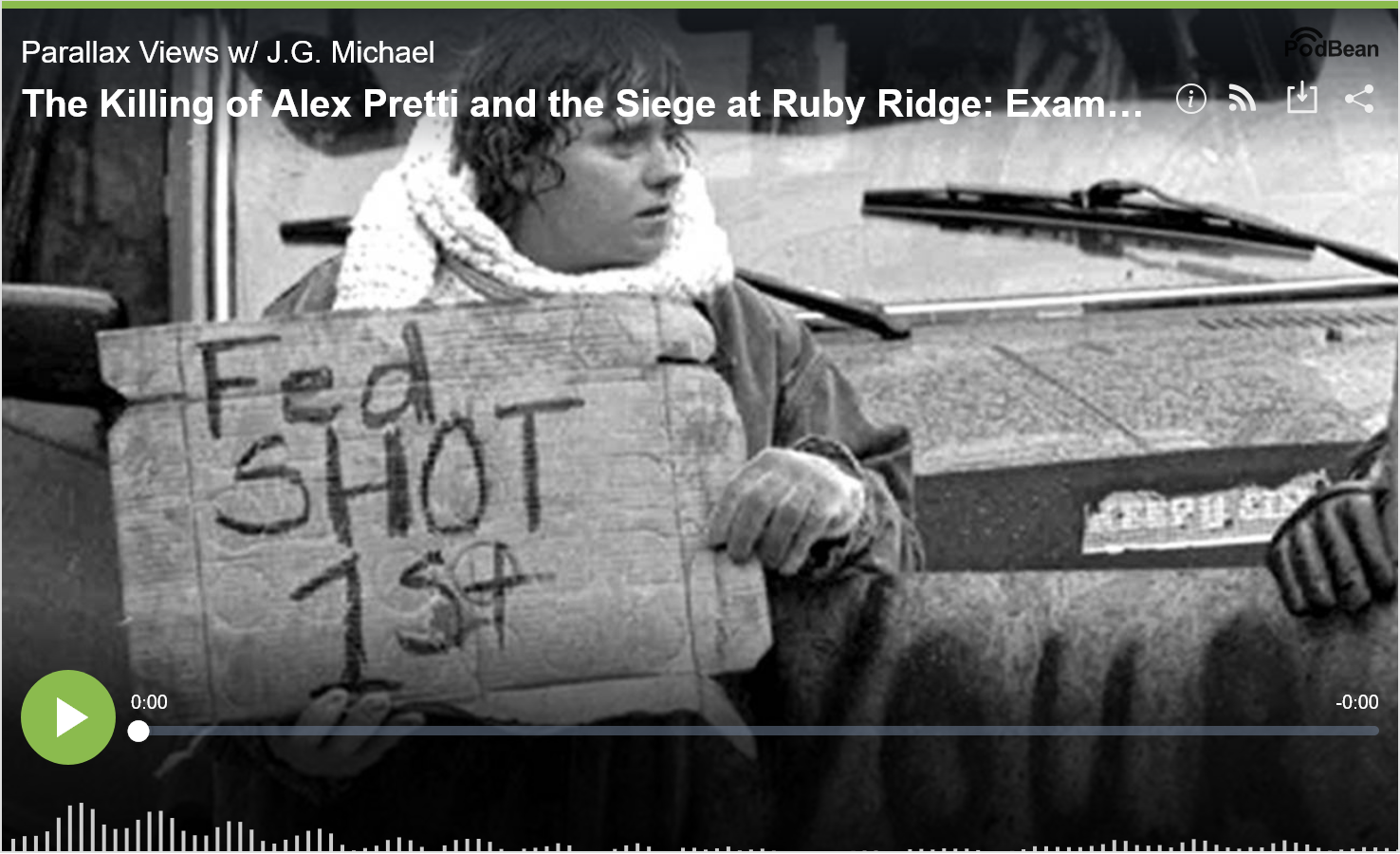
Here is J.G. Michael’s summary of the show:
On this edition of Parallax Views, libertarian gadfly Jim Bovard returns to dissect the federal killing of Alex Pretti in Minneapolis and its disturbing parallels to the infamous Ruby Ridge standoff. Bovard, author of ten books including Public Policy Hooligan, Attention Deficit Democracy, The Bush Betrayal, and Lost Rights: The Destruction of American Liberty, examines how federal law enforcement, including ICE, Border Patrol, and the FBI, have historically operated under preemptive “Rules of Engagement” that sanction the use of deadly force against American citizens. He traces the echoes of Ruby Ridge, where the Weaver family was ambushed by FBI snipers and U.S. Marshals, to the recent Minneapolis shooting, highlighting patterns of threat inflation, government cover-ups, and the erosion of civil liberties.
In this episode, we discuss Alex Pretti’s killing—shot in the back multiple times despite surrendering a legally carried firearm—and the official government narrative that quickly labeled him a “domestic terrorist.” Bovard contrasts the federal and political spin surrounding Pretti with the 1992 FBI and ATF operations in Idaho, where Randy and Vicki Weaver, along with family friend Kevin Harris, were targeted under similarly aggressive rules of engagement. He details how, in both cases, federal agents preemptively used lethal force, disregarded due process, seized evidence to prevent independent investigation, and faced little accountability, despite public outcry and judicial rebukes.
Bovard also examines the broader implications for civil liberties, gun rights, and freedom of speech, including how videotaping federal agents has become criminalized in practice and how political partisanship—exemplified by Trump administration officials and conservative media—can shape public acceptance of state violence. He unpacks the historical, legal, and political dimensions of these incidents, from the misrepresentation of armed threats to the systematic attempts at cover-up by the Justice Department and federal law enforcement agencies.
This episode is essential listening for anyone concerned with U.S. federal law enforcement abuses, ICE and Border Patrol accountability, FBI sniper operations, government overreach, civil liberties in America, the politics of domestic terrorism labeling, and the ongoing legacy of Ruby Ridge in contemporary policing. Bovard’s insights offer a stark reminder of how federal power can be misused and why vigilance is necessary to protect individual rights against state violence.



Comments are closed.