
James Corbett and I thrashed think tanks today on his Corbett Report, one of the most insightful and entertaining podcasts in the world. He discussed my recent Future of Freedom Foundation article, Intellectuals Paved the Road to Serfdom.
I used spectral lighting in honor of Halloween. I will read up on how to do podcast tapings without leaning on sunlight.
Here’s the segment where he and I had an intellectual turkey shoot:
Here’s a link to his full 54 minute show on the topic:
https://corbettreport.com/think-tanks-stink-tanks/
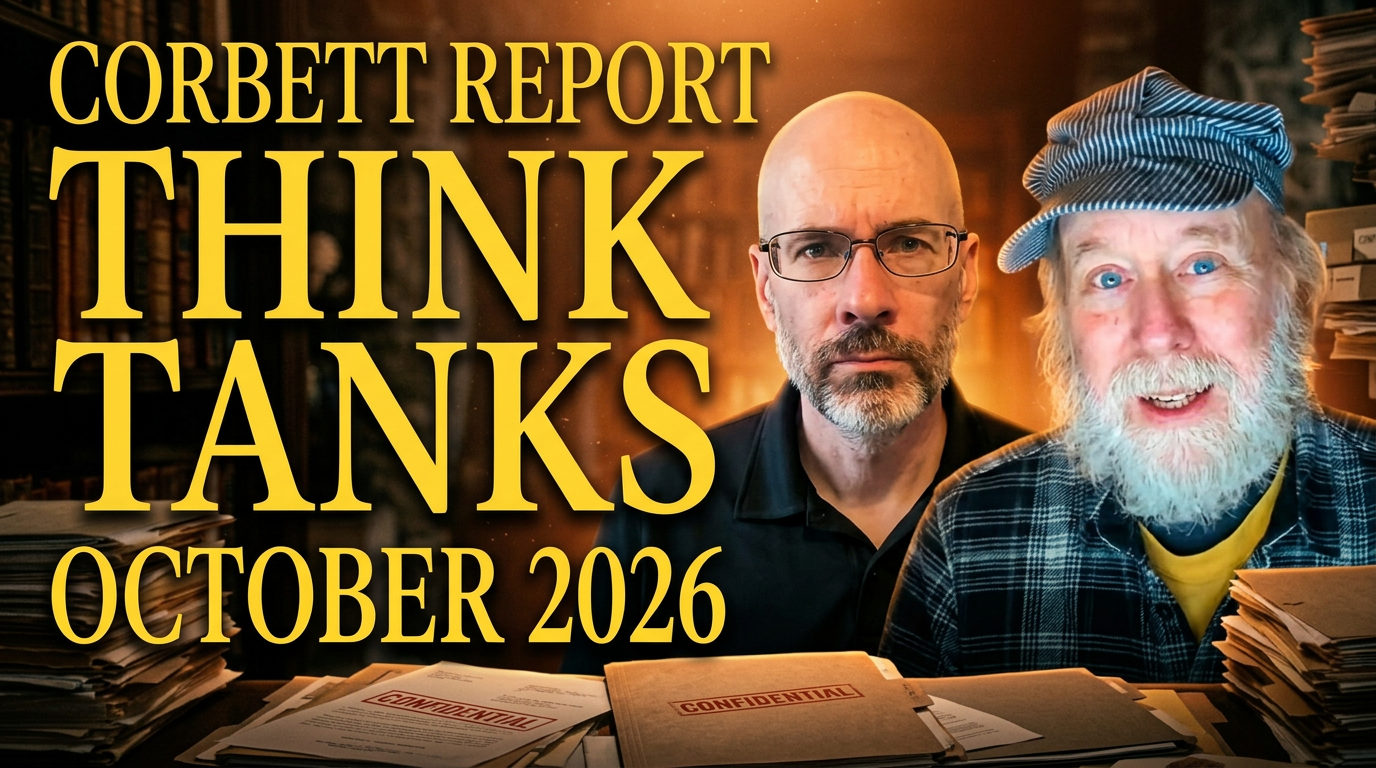
Here’s an alternative illustration created by Descript AI:
Here is a partial transcript of our exchange:
CORBETT: So I had the chance to talk to James Bovard about this article and about his view of the think tanks, and he started by telling me an interesting anecdote about the time that he arrived in Washington and was himself applying and interviewing for a position at one such think tank
BOVARD: My experience with the Washington think tanks started early.
I came to DC in 1980. I was, 23 at that point, and I got an interview at an up-and-coming think tank called The Heritage Foundation. And at that point, I’d had some good luck writing. I had a couple pieces in The New York Times and Chicago Tribune and Boston Globe, San Francisco Chronicle, places like that, which was very unusual for anybody who wasn’t liberal left.
And so I dropped off my articles and I came to the interview and, you know, I waited about 15 minutes. This is a day, you know, very hot June day and, um, the, um… after I sit and cool my heels, the, , guy comes in and he’s, he’s wearing a, a vest from a three-piece suit. And I’m thinking, “Well, this, this is unusual.”
I was expecting him to pull out a, gold watch and chain. , But so he sits down and he says, “Oh, so I see you’re a writer.” And I’m thinking, “Okay, this is due diligence.” You know, it’s, ,at least he’s looking at the resume page now. And he’s sitting there, he nods his head and he says, “Oh, oh, New York Times, that’s good.
Washington Star, that’s good. These other places, that’s good.” And then and then he gets to the bottom of the page and he goes, “Oh,” and he starts to gloat and he says, “I see that you didn’t finish college.” I said, “Yeah, that’s true.” He says, “Mr. Bovard, you’ve got to pay your dues.” And I just about burst out laughing and he said, “Finish college and come back here in a few years and we’ll talk to you then.”
And it was like the, the interview ended there ’cause it was like, you know, I didn’t have time for that . But that was a snippet that captures the, not just the think tanks, but also the Washington attitude towards writing and thinking and research. Because it didn’t matter that I’d already written, uh, that I’d done humorous pieces for some of the nation’s top papers And that I was coming from a, you know, libertarian-leaning position, and I was actually interested in what the government did.
It didn’t matter ’cause I didn’t have that piece of paper. And, I had thought that there would be some intellectual stimulation in Washington, but, you know, I was naive on that point. Instead, it was like the, um, it was like a, um, circle jerk that never ends. And you had people rising to the top of these organizations, that have just become– that, that were a complete joke as far as any intellectual honesty or literary ability.
And it’s funny. It’s sort of like the perfect sandwich of my time in DC. It starts out with the Heritage Foundation, you know, you got to pay your dues. And what is Heritage now? Heritage is one of the richest think tanks, and they’ve got a huge mural on the side of the think tank headquarters of Donald Trump’s face.
And how are you supposed to do honest thinking about Trump policies if it’s like, you know, this is the kind of thing you would expect to see, George Orwell portraying in 1984 or the Soviet Union after World War II. But instead, this is a, an, a, an esteemed think tank that openly worships a, , a politician.
Call me old-fashioned, but, I think it was H.L. Mencken that said the, the only way a journalist should look at a politician is down. Very true. Your interview experience there is sh- disgusting, but not at all surprising, I suppose. And the craziest thing is that as you detail in your article, it’s actually documentable and has been scientifically studied.
CORBETT: You note Johns Hopkins University political scientists Jennifer Backer and Benjamin Ginsberg surveyed almost 900 federal bureaucrats, White House and Congressional staffers, and other members of the Washington policy community for their 2016 book, What Washington Gets Wrong: The Unelected Officials Who Actually Run the Government and Their Misconceptions About the American People.
Backer and Ginsberg noted a pervasive attitude of smug dismissiveness toward the citizenry and little sense of accountability, as well as a sense of cultural or intellectual superiority inside the Beltway Bubble. You don’t say. And right to the point of what happened to you in your interview there, Washington Post reporter Jeff Guo, reviewing the book, insisted that a lot of this elitism is probably justifiable because most of the survey respondents have advanced degrees.
BOVARD: Yeah. Well, it’s it’s wonderful to see snippets like that basically confirm everything that you or I might think about Washington. There is a sense of decorum that you shouldn’t be, calling, , things out as they actually are. I had this, back in the mid-1990s. I was writing a lot about Waco, the federal killings there, and the federal killings at Ruby Ridge.
Almost all the think tanks, including the libertarian ones, would not touch that subject because it was almost like it was tainted. “Well, you know, the government shouldn’t have done that, but these were not good people, and, you know, these are people that didn’t have advanced degrees.” Yeah. Well, um, so of course, I mean, there is the, there’s the paternalistic aspect to it.
CORBETT: There’s the smug dismissiveness of it, the intellectual sort of, um, circling of the wagons aspect to it. But if this was just a bunch of effete, impotent intellectuals essentially safeguarding their own, you know, personal wealth, um, by selling these, these policy prescriptions, that would be one thing.
But unfortunately, these pr- policy prescriptions really do have a real effect on the real world, and we know that the think tank– think tanks are an essential part of the military industrial complex. You know, for example, the Foundation for Defense of Democracies, which, as you point out, extols politicians who advocate bombing Muslim nations.
We know of course about, , such things as idling, vast swaths of the American farmland and et cetera, that come as a result of the types of policies that are advocated by these groups, and- at the behest of donors who largely are shrouded behind mystery and are often not uncovered until long after the policies they were advocating for are actually enacted.
So what, what does that tell us about the way power actually operates in Washington and who is really pulling the strings?
BOVARD: Well, maybe it’s not a good idea to trust the policymakers. It’s funny how so many of the think tanks simply became lobbying organizations, but they had a certain credibility.
It was safer for journalists to quote them as, as, uh, you know, uh, John Doe from Think Tank ABC said, instead of saying John Doe, – who got a million dollars under the table , now says, you know. Um, this is something which has happened a lot. Some of the think tanks have been very active pushing for censorship in Europe and elsewhere, and they were mostly AWOL during the COVID pandemic.
There was almost no principled opposition to the government abuse of power and surveillance and mandates from Washington think tanks during the COVID epidemic, COVID– during the COVID pandemic Y-
CORBETT: you raise such an important point there. Obviously, in fact, it was a lot of think tanks and independent organizations that were actively lobbying for governments to censor people online, like The Corbett Report and other outlets that were trying to tell the truth about what was going on during that, those lockdowns, et cetera.
And of course, very, very, very, very little, if any, pushback from the intellectual circles and the think tank circuit on those destructive policies. But I think as a result of that, what we have seen is a massive tidal shift in general public opinion about the expert class in general. I would posit that people are much less likely to go along with something because experts say, or the doctors told us, or this think tank has pronounced such and such a thing.
I think that is the type of statement that would have gotten a pass several years ago that probably would not get a pass with a lot of people today precisely because of the COVID era. Do you agree or, or disagree with that?
BOVARD: I think you’re right, unless there is an emergency. [SARCASM ALERT] No, um, seriously, I hope you’re right.
I don’t have a good perspective ’cause I’ve, I lived in the DC area for too long, and it makes me jaded, and I’ve seen so many rascals get away with so much BS for so long. I certainly hope that the, leash can be pulled back on some of the outrages and that that if we do get another pandemic-type threat, that there is not the stampede to censor and suppress and put hundreds of millions of people under house arrest.
I mean, that was such a travesty. I guess I’m frustrated or I I’m disappointed that there has been so few people held liable for the positions they took or the actions that they did, and Washington think tanks were at the top of that list because so many of them had horrible policies, recommendations during COVID and the money’s still rolling in.
Big pharma’s still generous.
CORBETT: Unfortunately so. Yes. Well, it’s hard not to be cynical and jaded once you have seen this taking place for long enough. But at any rate, we persist in ringing the alarm for those few who have ears to hear it. Any other sort of general thoughts you have on the think tank industrial complex?
BOVARD: there was a lot of potential hink tanks early on raised the possibility that you would have alternative sources for ideas and truth from the, compared to the federal government. So much of the nation’s media is utterly hooked on federal handouts for, , media and news and information and truth, and that’s a, it’s a huge problem that the federal government has been allowed to define truth for its own policies and its own mandates.
And think tanks raise the possibility of a vigorous pushback. We’ve seen some of that on Trump’s trade policy. It’s, there have been a number of think tanks that have done very good work bashing that. It hasn’t stopped it. It’s still going on, and I don’t know if the lessons of Trump’s debacles have gotten connect uh, that’s connected or if the next politician that comes along…
But, Trump’s trade policy is a great example of how, how ideas work in Washington because the, because the failure of protectionism was obvious from the 19 tw- uh, late 1920s, 1930s, after World War II. You had this worldwide era of prosperity thanks to much more open markets. And yet you’ve easily, you’ve had a bunch of think tanks come in and a conservative mostly movement that was basically turning economics inside out, and they’ve had credibility.
, The New York Times, showcases some of those most, um, innovative, shall we say commentators on why trade barriers will make us rich or that they’re a triumph for the national interest. It doesn’t matter what the evidence is. If there’s a [policy] course, if there’s enough donors, and if there’s enough nitwit editors, or as far as US foreign policy if there’s enough people who have been bought or silently paid off or given fellowships or positions here, there is so much more dark money than what people suspect there is.
CORBETT: I always like to end on something of a positive note. So, uh, what’s your solution to all this, Jim? How do we defeat this problem?
BOVARD: I don’t know that it’s possible to defeat it, but it may be possible to decrease the damage. And, uh, vigorous skepticism is, uh, one of the first steps. And the other thing is to recognize that Washington institutions are gonna be pro -Washington, which means being pro -government.
There are some exceptions, and there are some individuals who have done some fine work. There is a systemic non -recognition of the collateral damage that the federal government inflicts on America and the world, and you can’t count on Washington think tanks to tell you how much damage Uncle Sam is doing
CORBETT: That is the always lovably irascible but always corrigible Jims- Jim Bovard of jimbovard.com talking about his recent article on Intellectuals Paved the Road to Serfdom, which I will once again commend to your attention.



Thanks for the transcript. The ‘show me your credentials’, scam is just a variant of the ‘show me your official papers’ demand because they don’t want to know what you can actually do or what you personally have to say but only if you have been the recipient of a prior vetting by authority that demonstrates your submission and obedience to the ‘powers that be’.
“And what is a good citizen? Simply one who never says, does or thinks anything that is unusual. Schools are maintained in order to bring this uniformity up to the highest possible point. A school is a hopper into which children are heaved while they are still young and tender; therein they are pressed into certain standard shapes and covered from head to heels with official rubber-stamps.”
— H.L. Mencken
Excellent point on the credentials. Always sad when my bright smile is not enough to slide by….