
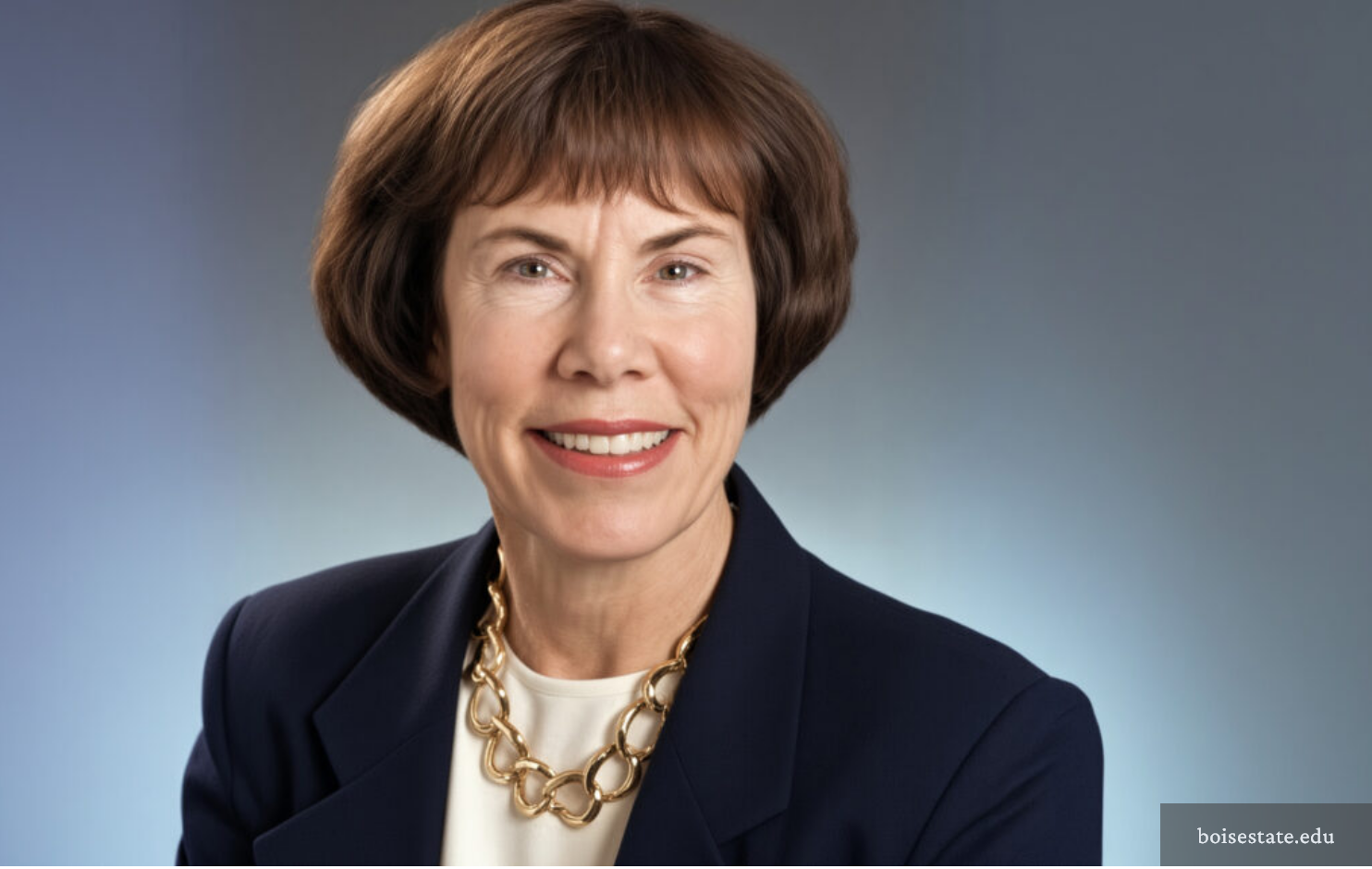
 Economics professor Charlotte Twight passed away this past week. She was a courageous and principled opponent of the federal abuse of power across the board. Her training as a lawyer was a huge asset in her analyses of the rascalities of federal agencies. I exchanged some emails with her over the decades but didn’t have the pleasure of meeting her.
Robert Higgs was a friend of Twight and posted a tribute to her at the Independent Institute website.
Below is the review of her 2002 book that I wrote for The Freeman.
The Freeman: Ideas on Liberty, June 2003
BYLINE: Bovard, James.
Review: Dependent on D.C.: The Rise of Federal Control Over the Lives of Ordinary Americans
by Charlotte Twight
St. Martin’s Press/Palgrave [] 2002 [] 512 pages [] $26.95 hardcover; $17.95 paperback
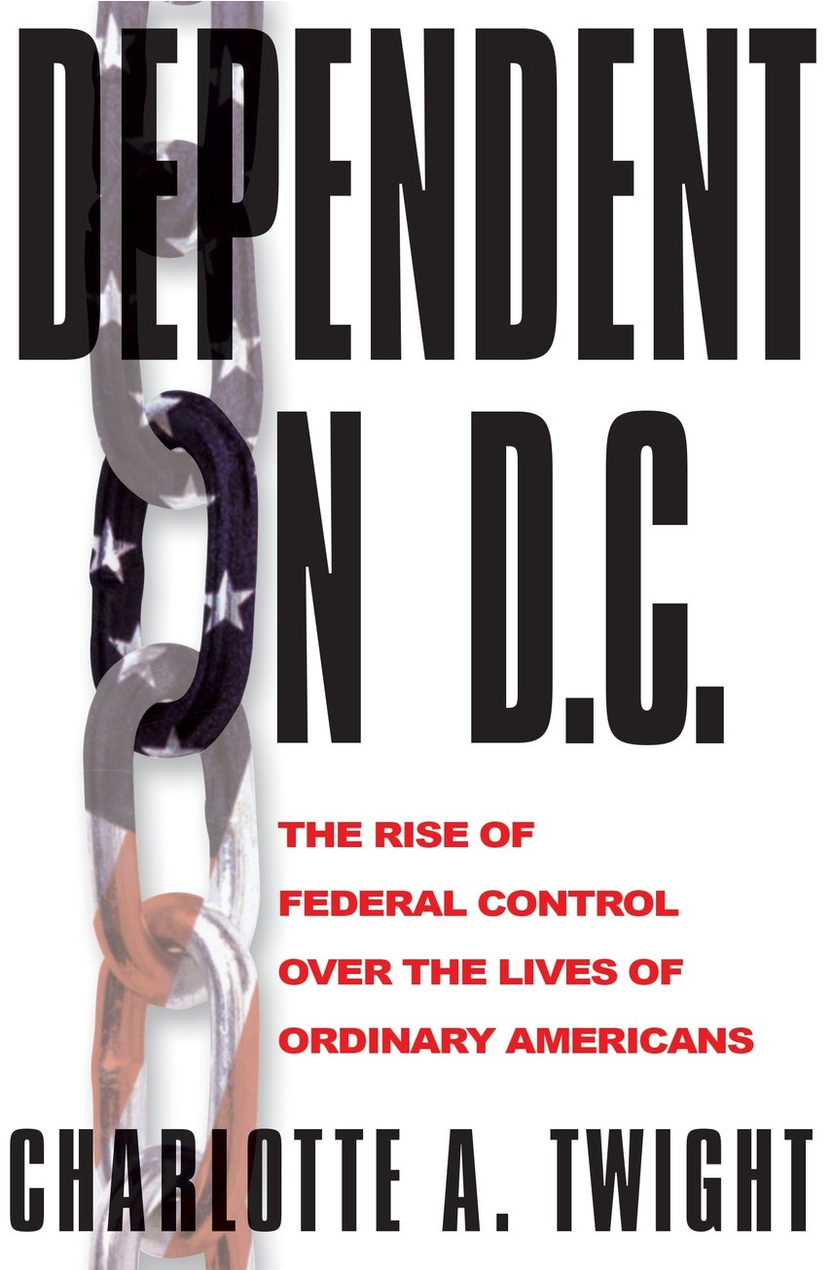 Charlotte Twight has written an excellent book to help Americans understand how the federal government is insidiously seizing control of their lives, year by year, edict by edict, emergency by emergency. Twight provides both a solid theoretical framework and bevies of examples to drive home the danger from Washington.
A professor of economics at Boise State University, she highlights how, “from the perspective of individual liberty,” the “authority to control, not the specific controls imposed at a particular point in time,” is the key issue. Her concern is “not only the growth of dependence but also the growth of an ideology of dependence-the normative judgment that broad governmental power creating pervasive dependence on government is desirable.”
The author shows how politicians and bureaucrats are continually slanting the playing field against individual freedom. Twight warns, “Deliberately manipulating our ability to stop their power quest, federal officials have used techniques that systematically increase people’s personal costs of resistance.”
Twight also shows how government grows by deception, for example, how presidents, congressmen, and bureaucrats conned Americans into accepting Social Security. The Social Security Administration for decades told people that their Social Security taxes were being held for each citizen in individual accounts; in reality, as soon as the money came in, politicians found ways to spend it. Social Security Commissioner Stanford Ross conceded in 1979 that “the mythology of Social Security contributed greatly to its success. . . . Strictly speaking, the system was never intended to return to individuals what they paid.” Ross said that Americans should forget the “myth” that Social Security is a pension plan and accept it as a tax on workers to provide for the “vulnerable of our society.”
American citizens now shoulder over $12 trillion in unfunded Social Security liabilities. If the defenders of Social Security insist that the fraud was justified, the question arises: What future limits should exist on government’s prerogative to deceive the people? If Social Security is an acceptable fraud, what would government have to do before it was considered to have gone too far?
Twight vivifies how the federal control of education has been increasing for decades. Public education is the most expensive “gift” that most Americans will ever receive. Government school systems are increasingly coercive and abusive both of parents and students. Government schools in most areas have been taken over by unions, judges, and grandstanding politicians. And the worse schools have failed, the more years of students’ lives they are commandeering. Unfortunately, regardless of the continual failures of Washington’s education programs, federal intervention has spread like kudzu through the nation’s schools.
One of the best parts of the book is the analysis and revelations about federal surveillance of average Americans. Twight drives home how the feds were already sticking their noses practically everywhere-even before 9/11, the Patriot Act, and Total Information Awareness.
Dependent on D.C. walks readers through how the government has acquired far more arbitrary power in recent decades-and why that power is a dire threat to the Constitution and Americans’ everyday life. Anything that increases dependency on government undermines liberty. How can a citizen help steer the ship of State at the same time that he has his hand out for another government benefit? Once a person becomes a government dependent, his moral standing to resist the expansion of government power is fatally compromised. Every increase in the number of government dependents means an increase in political power. Each increase in the number of government dependents means another person who sees limits on government power as a threat to his own personal well-being.
America is capsizing as a result of the vast increase in the number of government dependents and employees-a voting bloc that overwhelms every other potential force. H. L. Mencken quipped in the 1930s that the New Deal divided America into “those who work for a living and those who vote for a living”-a division more true now than ever before.
Hopefully, Americans will wake up to the danger of constantly growing government power before it is too late. However, as Twight’s book shows, that defense is becoming more difficult with each passing year.



No comments yet.